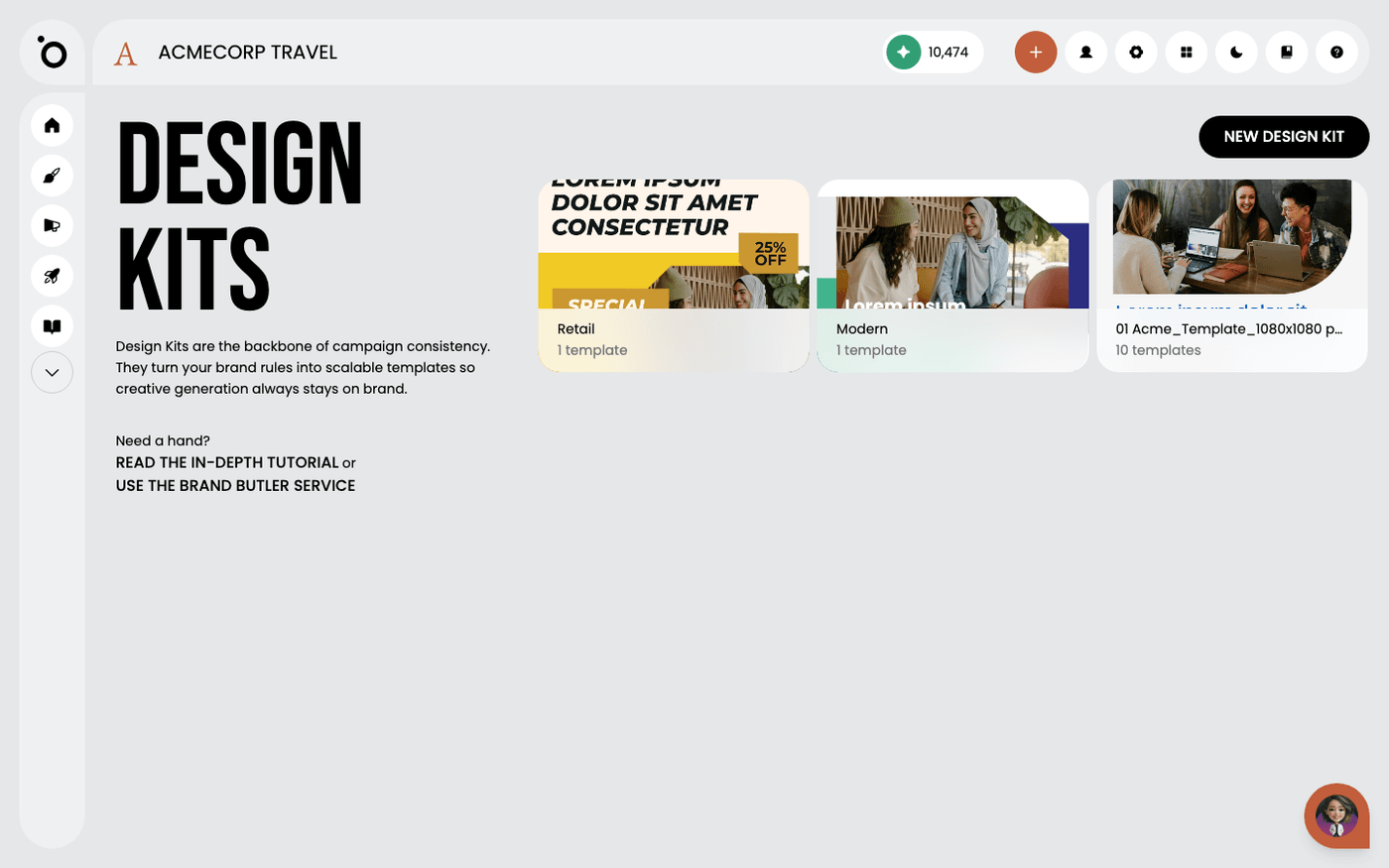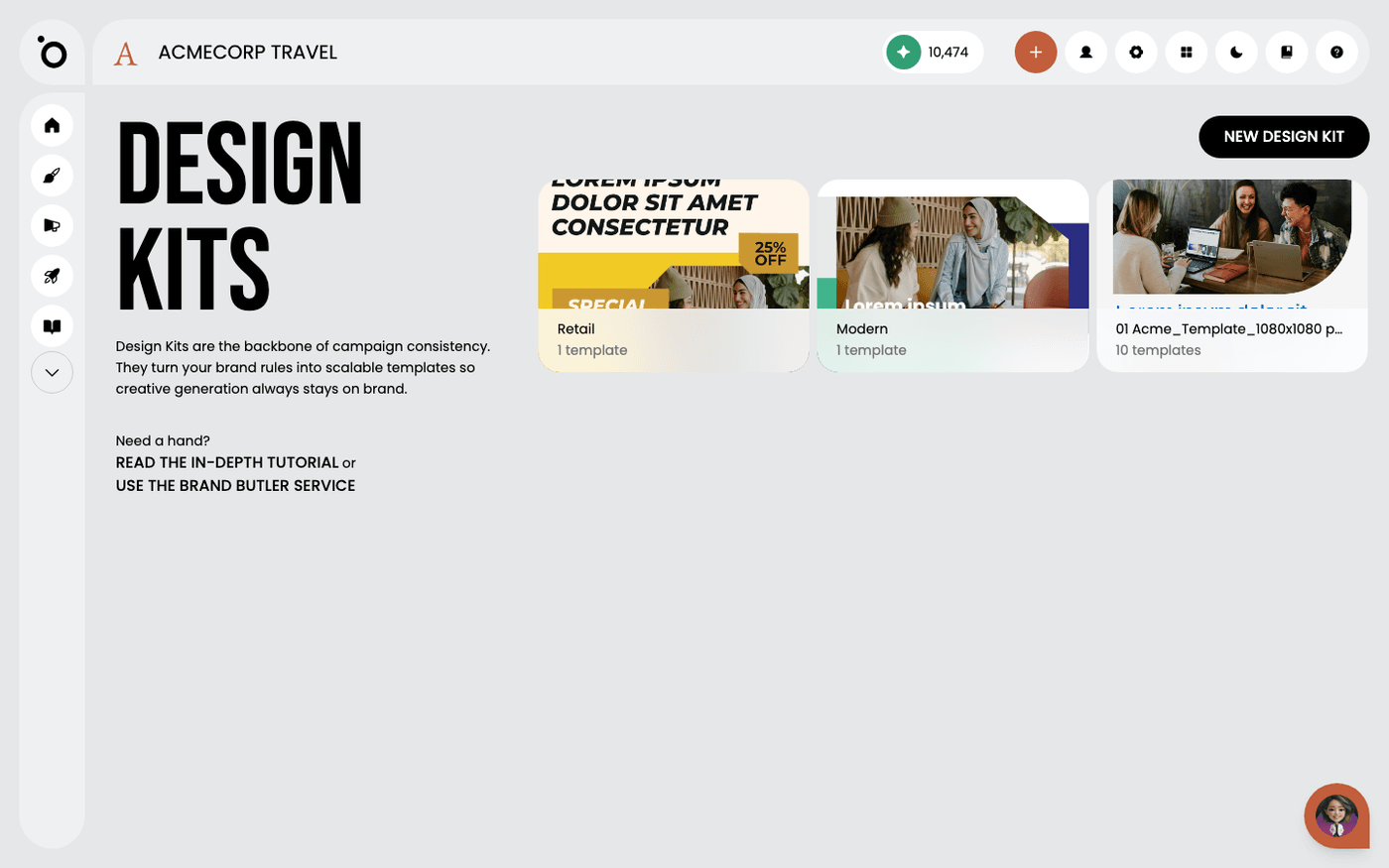
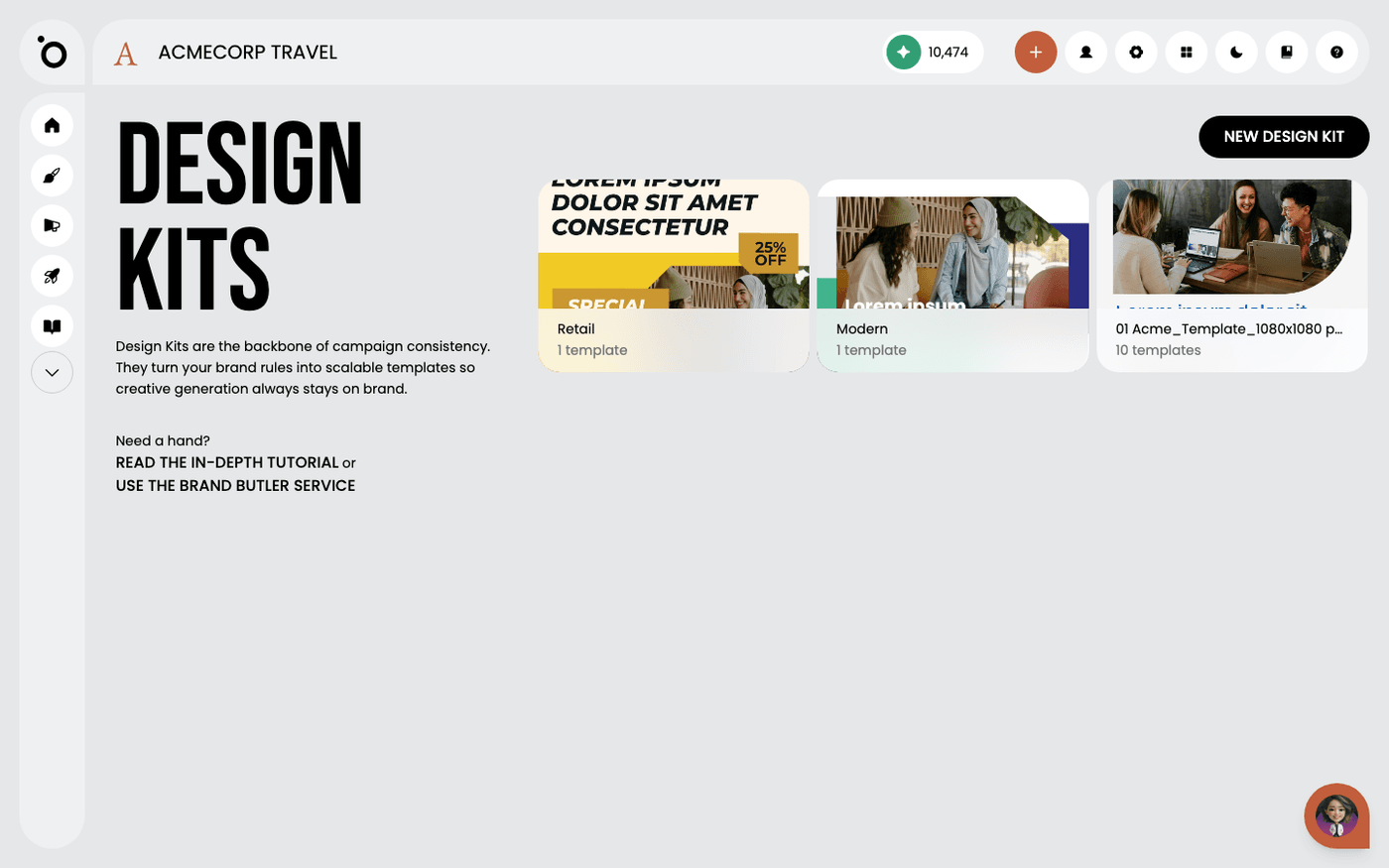
In short: You need at least one kit before you can generate a campaign.
A Design Kit is the bridge between your brand identity and the assets you generate. It is not a folder of templates, it is a structured system that defines editable zones, design constraints, dynamic content and layout rules.
Without one, every asset is built from scratch. With one, the layout is fixed and only the content changes, which is what makes output consistent across dozens of formats.
Worth saying plainly: building a kit is a design project rather than an upload. It rewards someone who understands layer structure and responsive layout, which is why there is a service to do it for you.
Everything flows from the parent
Any file in the kit can be the parent, usually your key visual. Children inherit from it, so a change to the parent propagates rather than needing repeating across every variation.
Naming is what links things
The relationship between parent and child is defined by blocks. Naming text and image blocks consistently across layouts is what lets the system recognise them as the same element.
Three routes in
Upload takes a file you already have, which can be a Canva design exported as PPTX, a layered PSD, or an IDML from InDesign. Clone copies a kit you already have. Template Store starts you from a ready-made one. Whichever route, the structure is parsed into editable placeholders and locked elements. A fourth option, Blank Canvas, sits in the same dialog marked Coming soon.
Placeholders and variables
Editable components are labelled, h1, h2, cta, image and so on. You choose which image layers can be replaced, and set defaults, limits and formatting rules for each.
Constraints and locking
Some things are fixed, like logo position. Some are restricted to brand settings, like colour. Others move freely within bounds, so a headline can shift but not overflow.
Formats
A kit supports as many output formats as you need, and elements can be toggled per format, so a CTA can be dropped from the narrowest sizes.
Involve a designer for the component naming, the editable-versus-locked decisions, responsive behaviour and edge cases like text overflow. It is tedious, and it is the part that decides whether everything generated afterwards looks designed.
Last updated 12 August 2026